This article, contributed to Splash by WinGD, explains why ethanol is a good temporary marine fuel. The WinGD engines were built to run on methanol, but can easily be adapted to burn ethanol. And ethanol is readily available commercially, especially in Brazil and the US, at a competitive price with normal marine fuels.
The article explains how burning ethanol will lower the fuel emissions factor to more than four times lower than VLSFO. For a company interested in lowering its carbon emissions profile now, this is a big boost.
Such a firm is Vale, the international mining company, which supplies iron ore to China from Brazil and elsewhere. Brazil produces ethanol in large quantities, since it’s banking on ethanol for emissions reduction in autos.
Ethanol is certified for the EU Emissions Trading System, but not under FuelEU. That’s a hurdle that needs to be overcome in the near future. But much shipping that can use ethanol does not touch European ports, and so can avoid carbon charges and regulation while still reducing carbon pollution.
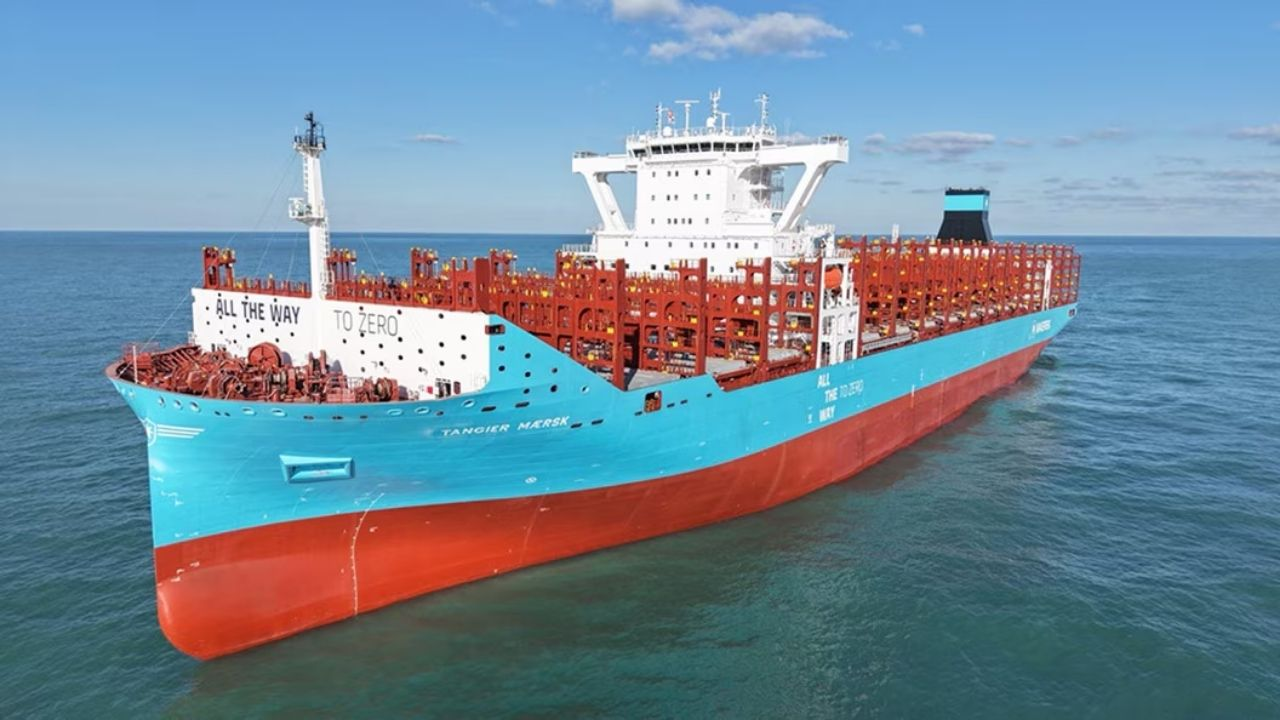
The latest Maersk vessel to feature a WinGD methanol-fuelled X-DF-M engine is the 9,000 TEU Tema Maersk. Its sister ship Tangier Maersk is pictured here.

Andrea Lazzaro August 14, 2026
https://splash247.com/ethanol-emerges-as-a-marine-fuel-with-big-name-backing