Tag Archives: maritime decarbonization

Ethanol emerges

This article, contributed to Splash by WinGD, explains why ethanol is a good temporary marine fuel. The WinGD engines were built to run on methanol, but can easily be adapted to burn ethanol. And ethanol is readily available commercially, especially in Brazil and the US, at a competitive price with normal marine fuels.

The article explains how burning ethanol will lower the fuel emissions factor to more than four times lower than VLSFO. For a company interested in lowering its carbon emissions profile now, this is a big boost.

Such a firm is Vale, the international mining company, which supplies iron ore to China from Brazil and elsewhere. Brazil produces ethanol in large quantities, since it’s banking on ethanol for emissions reduction in autos.

Ethanol is certified for the EU Emissions Trading System, but not under FuelEU. That’s a hurdle that needs to be overcome in the near future. But much shipping that can use ethanol does not touch European ports, and so can avoid carbon charges and regulation while still reducing carbon pollution.

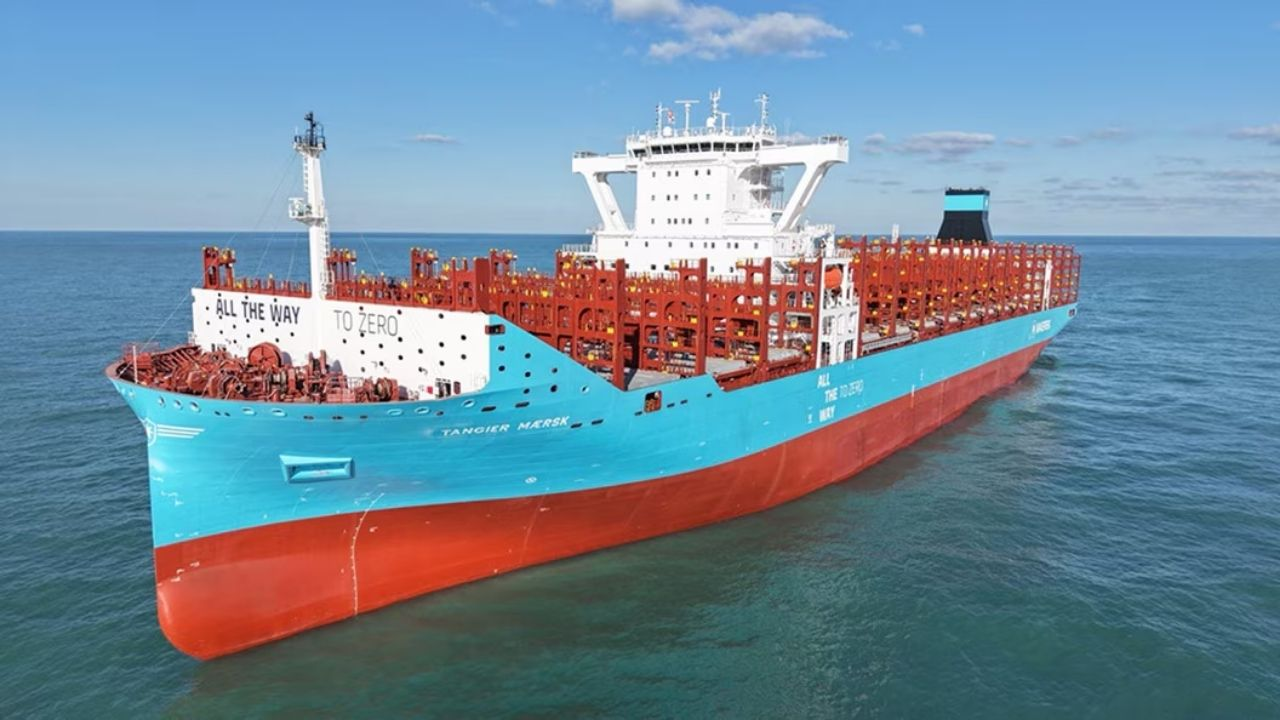
The latest Maersk vessel to feature a WinGD methanol-fuelled X-DF-M engine is the 9,000 TEU Tema Maersk. Its sister ship Tangier Maersk is pictured here.

 Andrea Lazzaro August 14, 2026

https://splash247.com/ethanol-emerges-as-a-marine-fuel-with-big-name-backing

China-France Green Corridors: A New Blueprint for Maritime Decarbonization

Green corridors are a meaningful approach to emissions reduction for shipping. They coordinate the various factors required to make emissions reductions possible. Designating a green corridor will ensure that emissions-reducing fuels will be available in sufficient quantity for the ships calling, and the infrastructure for production and delivery is there. On-shore power will also be available for ships, so they do not need to operate engines just to provide power for the ship support. And in the port, cargo handling equipment can also be designed with cleaner emissions. Properly done, drayage functions will also operate with cleaner power.

It’s great to see a new green corridor connecting China and France. The ports involved are both important stops. And we can anticipate more trade between the EU and
China because of the American tariff hoopla.

Michele Labrut,Americas Correspondent

February 6, 2026

https://www.seatrade-maritime.com/ports-logistics/first-green-shipping-corridor-between-france-and-china

Exploring Green Maritime Fuels: CMB.Tech’s Ammonia Plans

We are seeing quite a few announcements of green maritime fuels projects that seem viable. Ammonia is one of those, provided it can be produced in a green fashion. CMB.Tech, one of the maritime shipping and services firms that features sustainable options, has initiated an effort that will begin in January 2026.

CMB.Tech announced it will buy green ammonia from the China Energy Engineering Group (CEEC) Songyuan project, a producer in Jilin province, China. China is a good place to look for green fuels, because of its large and increasing use of solar energy to generate green electricity. Green ammonia production uses lots of electricity.

CMB.Tech will obtain 11 dual-fuel ammonia-powered ships in 2026. It is also planning to operate in the ammonia distribution business, and has obtained an interest in a Chinese ammonia supply chain company, Andefu. The first ammonia for maritime use will be transported to Panjin Port, initially by truck and possibly later by unit train.

Alexander Saverys, CEO of CMB.Tech says: “Today marks a big milestone in our decarbonisation journey. With an investment in the Chinese ammonia supply chain, CMB.Tech will be able to provide green ammonia to its ships.”

His firm is in the forefront of green maritime investment, and is not stopping despite the slowdown of green progress in the international political scene.

Gary Howard, Middle East correspondent

December 16, 2025

https://www.seatrade-maritime.com/alternative-fuels/cmb-tech-invests-in-chinese-green-ammonia