Tag Archives: Maritime Risk Management

Maritime Flag State Ratings

The International Chamber of Shipping (ICS) has released its latest Shipping Industry Flag State Performance Table for 2025/2026. This report is updated annually. Flag state performance is growing in importance for the shipping industry.

Rounds of sanctions are occurring often, including sanctions of registries. Some ships are changing registries or even using false registries. Shippers, brokers, and carriers need to know the status of the ships they will be using.

The report highlights the criteria used to rate the flag states. Green squares signify positive performance by a flag state. Red squares highlight potentially negative performance. Various shades of grey and some additional markings indicate what the report calls neutral indicators.

Port Shipping Control (PSC) authorities provide most of the data for the ratings. There are three principal agencies and one target list:

  • Paris Memorandum of Understanding (MOU) countries
  • Tokyo MOU countries;
  • United States Coast Guard (USCG) Qualship 21 program
  • Respective blacklists or target lists of the agencies.

To be identified via the Paris and Tokyo MOU white lists, a flag must have undergone at least one inspection in the previous three years. For the Qualship 21 program, a flag must have made at least three distinct arrivals in each of the previous three years. For the Target Lists, flags listed as ‘Medium Risk’ have a neutral indicator.

Ratification of international maritime conventions such as UNCLOS, IMO and ILO also factor in. Some states may have partially ratified or accepted these conventions, or may have legal conflicts preventing ratification. These are also considered in the ratings.

A short section of the table is displayed here:
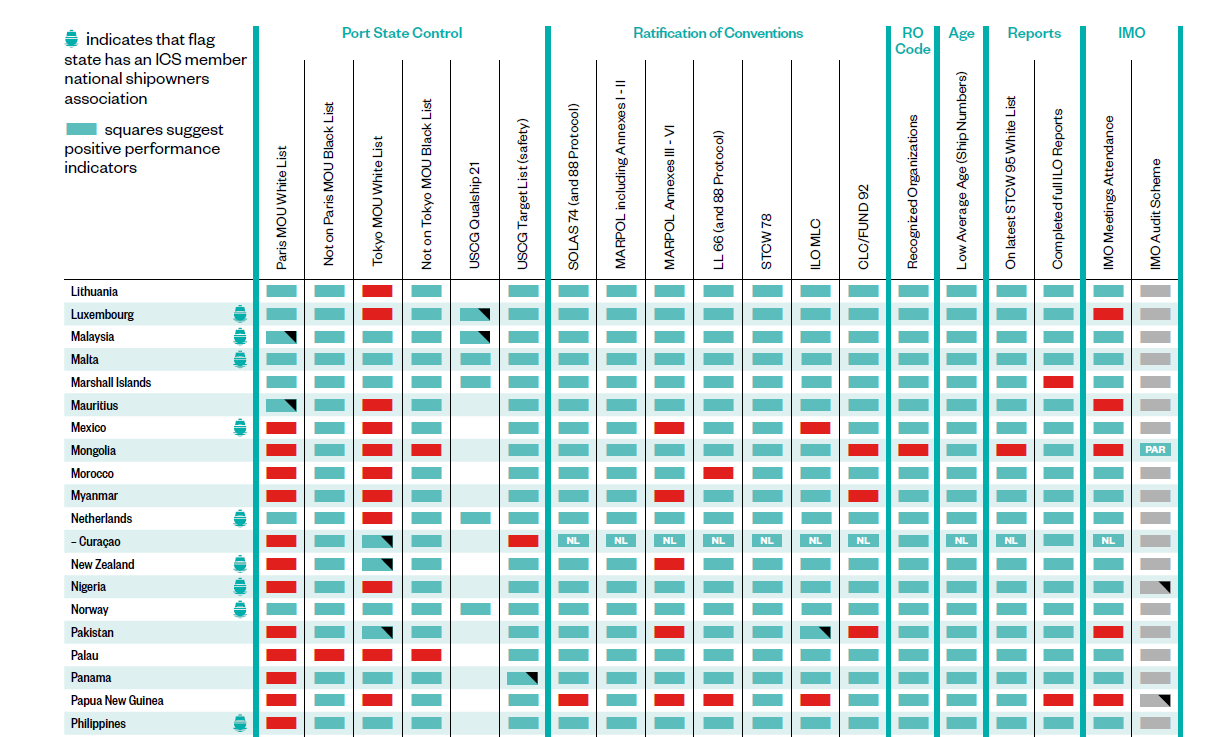
Source: ICS Shipping Industry Flag State Performance Table 2025/2026

The PDF report is accessible here.

It’s very important to have an independent verification of the performance of flag states regarding the major maritime conventions. These ratings give interested parties information to help them follow up on the standards the ships they hire are meeting. Questions should be raised before booking passage.

Sam Chambers January 28, 2026


https://splash247.com/ics-flag-table-names-and-shames/

EV Fires and Shipping

There’s been a lot of news and notice recently about fires aboard ships. EVs and their batteries have been frequently blamed. What are the actual facts?

This podcast features a risk management specialist who works for a P&I firm – one that rates risks for insurance and may actually provide the insurance to cover risks such as fires.

I was fascinated to learn that the evidence is scarce for lithium batteries causing shipboard fires. And it seems that vehicles with internal combustion engines (ICE), which don’t have lithium batteries, are just as likely to cause fires as EVs. It’s a complex subject, and you would expect insurers to be more concerned if lithium batteries were a big problem. But that’s not so, from the evidence collected so far. And there are quite a few techniques that ship operators and shippers could take to reduce the risk of fires even more.

We have to condition the conclusion; often shipboard fires consume all the evidence of how the fire started. But this concern about EVs seems to be a red herring.

In Focus Podcast, 10/30/2025

Geopolitics and shipping

Geopolitics is having a great effect on ocean shipping today. Trade is where wars are fought now. It may have been true in the past as well, but the means and methods are changing rapidly.

I listened to this podcast featuring Jon Thompson, co-founder and commercial director of Ambrey, an international risk management company. He made several interesting points.

What’s become possible only recently is to combine, using digital infrastructure, information about many factors into an overview of the risk attendant on any voyage. Ambrey has been working on displaying info about piracy, missile attacks, weather, environmental zones, conflict zones, fuel availability and usage, and others, so it can be incorporated into contracts and insurance provisions, as well as used by captains and ship managers to plan voyages to reduce risk and increase profit.

Ambrey started out supplying onboard security to ships, intending to prevent piracy. But their vision has now expanded to all the hazards commercial ships face; assessing, rating, and providing insurance against them.

Another point he made is that the oceans, 70% of the earth, are becoming better understood and measured. Ocean shipping needs to take advantage of this increasing knowledge about who’s using them where and what conditions they are facing.

John Thompson’s view of the data, analytics, and AI involved, and the business aspects it affects, is most interesting. Take a listen.

John also has interesting views on what he and others look for in hiring new people.

Seatrade logo

Marcus Hand | Aug 08, 2024

https://www.seatrade-maritime.com/ship-operations/geopolitics-and-shipping-john-thompson-ambrey