There is a shortage of ro-ro (roll on roll off) capacity for moving vehicles by sea. One possibility to move the cars is to put them into containers and ship them on container ships. But you can only get so many into a container – two per (twenty-foot equivalent unit) TEU or four in a forty-foot container.
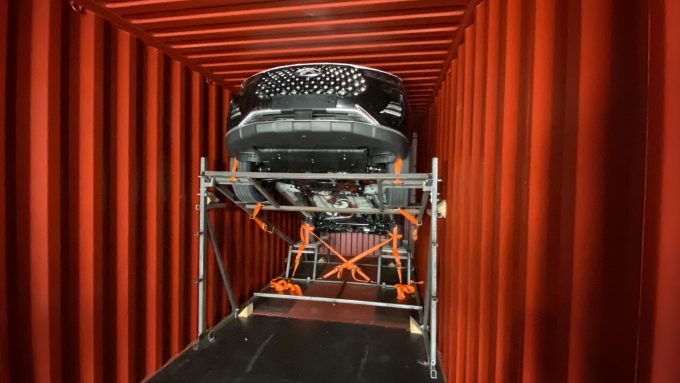
One solution would be to find a way to pack them tighter. And that’s what DP World, the large port operator, has done for voyages from China to Turkey. They can now get three Chery vehicles in a container.
Chery Automotive is a major Chinese car manufacturer, with a portfolio of ICE, hybrid, and all-electric vehicles. In July, they imported 10,000 SUVs into Turkey from China using this method.
Turkey is a big market for Chinese cars, but it’s also a gateway to Europe. Cars brought to Turkey could be sold on into European countries.
Packing of containers has always been a way to avoid shipping ‘air’ (empty space). But one issue is the incidence of fires on ships from lithium battery explosions. These explosions have become quite frequent. It’s due to the heat and close packing. So far, ro-ro ships have suffered most, though there have been lithium battery fires on container ships, due to shipments of other battery-powered equipment. Adding large numbers of cars will make the risk greater.
A TT Club risk management director noted that automakers are simply trying to get more energy into batteries, not investing in how to reduce the danger from shipment. They need to focus more on the risk in their designs.
Here’s a picture of the stacking. It’s not very clear, but you can see the rack.

By Charlie Bartlett 03/10/2023
Cars-in-containers innovation boosts ro-ro capacity for DP World