Tag Archives: delays

PierPass shelves permanent TMF plan as Long Beach calls for 24/7 supply chains

The problem with 24/7 operation at ports is that no one wants to pay for it. And that is despite the fact that the costs will probably wind up being added to the import cost and passed on to the shipper and customer.

It seems port executives and supply chain players differ in their view of what’s needed. Terminals and warehouse operators and perhaps even drayage firms don’t think 24-hour service is needed to relieve the current congestion. And the staffing costs of staying open 24/7 would rise, with a lot of potential dead time. It is also hard to find additional trained staff today.

Unions are resisting because they claim the port terminals and other unionized players are not willing to hire more union workers.

And the PierPass is being taken unfair advantage of; apparently some are charging higher fees for using the time slots in the hours outside normal working times. See the second article below, which claims PierPass is only incentivizing adjustments that make them more money, rather than enhancing the flow of goods.

Is it possible for port management to get control of this? It’s doubtful under the current port governance rules.

Perhaps we need even more involvement from the federal government or the FMC to get action.

By Ian Putzger in Toronto 14/02/2022

PierPass shelves permanent TMF plan as Long Beach calls for 24/7 supply chains – The Loadstar

Kim Biggar February 14, 2022

https://splash247.com/fmc-says-non-profit-pierpass-at-los-angeles-and-long-beach-is-making-millions-in-profits/

Glimmer of hope: Has the ship gridlock off ports finally peaked?

Flexport’s chief economist seems to think that’s possible.

He points to the fact that there won’t be any more stimulus checks to generate more demand for consumer goods. And the graphs show a rollover after a peak in January. The chart is telling:

Source: American Shipper, Chart: American Shipper based on data from Marine Exchange of Southern California

Flexport is a major broker and forwarder, based in San Francisco. They have a very thoughtful approach to understanding what they face in their markets. A pronouncement from them has some weight. Flexport just managed to raise $935 million to continue their advancement. That’s a bunch of capital.

The backers are big names, too. Andreesen Horowitz is a major VC with many successes to its credit.

It’s too early to declare victory. over port congestion. More demand will come. There is a lot of replenishing of inventory going on. And the excess empty containers at LA and Long Beach, and elsewhere as well, are still a big source of onshore logistics problems. And the truck driver shortage, and the Great Resignation. And demand is still elevated; when people can’t travel or go to restaurants, they buy stuff.

But with recognition of a problem, and it’s certainly well recognized now, people have started to work on solving the many little bottlenecks that conspire to make a supply chain grind its gears. Perhaps we will see a slow unwinding of the problems.

Greg Miller, Senior Editor Tuesday, February 8, 2022

Glimmer of hope: Has the ship gridlock off ports finally peaked? – FreightWaves

US importers using box ships to store cargo

US importers are not so worried about cargo waiting offshore to be unloaded. As long as they have enough for their sales or manufacturing, the cargo can sit on a container ship and the principal cost to the shipper is the interest cost. With interest rates at historic lows, that isn’t much.

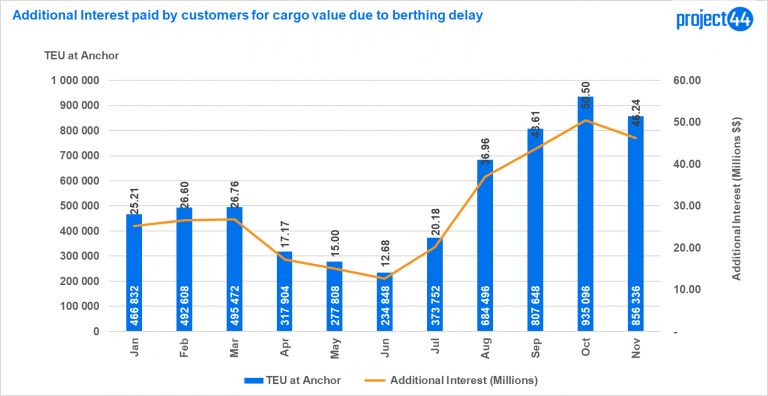
The graph below from project44, a Chicago, I- based visibility platform, shows the number of TEUs at anchor by month from January through November 2020, on the left. The rise starting in August is significant. Using data from HSBC, which show a 3.2% annual interest rate, using an average container value of $40,000, they calculate almost $50M per month in new delay costs, and cumulative inventory interest costs over $850 million.

The point is that these costs are a lot lower than inventory costs at warehouses. While the cargo is held at sea under riskier conditions, in the warehouse other costs kick in, not the least of which is space required. Insurance charges on the financed inventory also accumulate. And there’s the work, both labor and mechanical, of shuffling the inventory around; it’s very variable given the specific warehouse layout, but can be significant also.

So shippers are using the offshore jam-up rather than wishing it away. Only when the demand for products ratchets up so that the offshore inventory is needed will the stakes change. While we have significant COVID likelihood today, that isn’t likely to change much.

It’s always interesting to look at the overall question of inventory cost in the supply chain. Advantages to shippers can come from unlikely places.

By Nick Savvides 12/01/2022

US importers using box ships to store cargo – cheaper than warehouses – The Loadstar