
The Fall 2025 edition of Brookings Papers on Economic Activity contains this interesting paper which estimates the annual cost of climate events such as wildfires, air pollution, and warming weather. It’s no secret that climate change affects poorer members of society more. And we could guess that the West Coast, Gulf Coast, and Florida would see the largest effects.
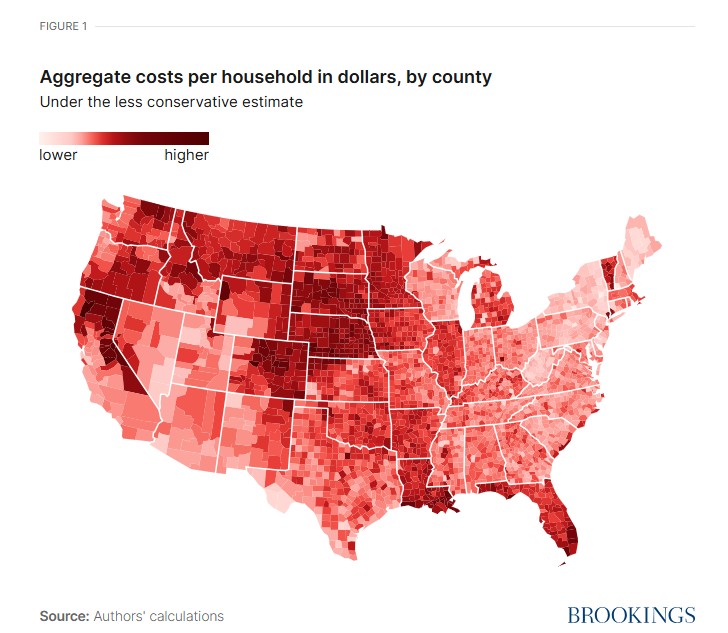
But this analysis by US county really brings home the fact that climate change is costing every ne of us money even today.
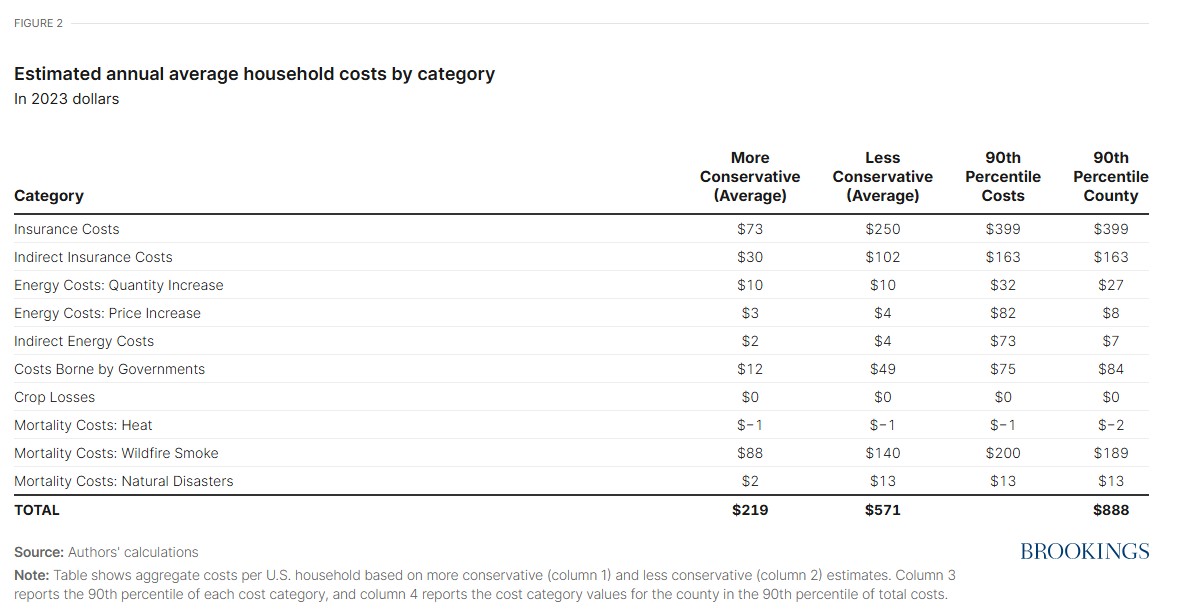
One interesting observation is the huge jump in cost for mortality and for insurance. It makes the point that the risks are what is driving the cost. It means we have to think about probabilities and chance effects. Most people aren’t very good at estimating that. Or they can’t appreciate the meaning of a certain low-probability number; they assume it can’t happen to them!
The mortality costs come from the effects of wildfire smoke and from natural disasters. The extra heat alone doesn’t create much cost. The extra deaths from heat are roughly offset by a reduction in deaths from cold weather.
Insurance costs both direct (payouts due to disasters) and indirect (premium boosts or loss of coverage) are a big factor. We might not manage to afford the risk of climate change. This table illuminates the source of the costs.
A final note; local governments are going to increasingly bear the cost of climate events. They will need to invest in protections or raise money to pay for the disasters as they occur. You can bet that will be priced into local bond interest rates and increased local tax rates on property or sales.
The authors don’t claim to have covered all the costs. But the analysis down to the county level brings home to localities and individuals how they are being affected.
The draft paper can be found from a link in the article— it’s posted here.

Kimberly A. Clausing, Christopher R. Knittel, and Catherine Wolfram
September 24, 2025
https://www.brookings.edu/articles/who-bears-the-burden-of-climate-inaction/
The paper summarized here is part of the fall 2025 edition of the Brookings Papers on Economic Activity, the leading conference series and journal in economics for timely, cutting-edge research about real-world policy issues. Research findings are presented in a clear and accessible style to maximize their impact on economic understanding and policymaking. The editors are Brookings Nonresident Senior Fellows Janice Eberly and Jón Steinsson.


 Supply Chain and Logistics