Category Archives: analytics

SONAR data show shippers’ East Coast strike worries

It’s interesting how when we measure something we soon are able to pick up signals that something different is happening. Freightwaves has been publishing SONAR data on different logistical measures for quite a while. This article shows several measurements which tell us that shippers are looking for alternatives in advance of any East Coast port strike in the US.

Inbound bookings are up at Los Angeles. Outbound container volume is up at LA and down at New York.
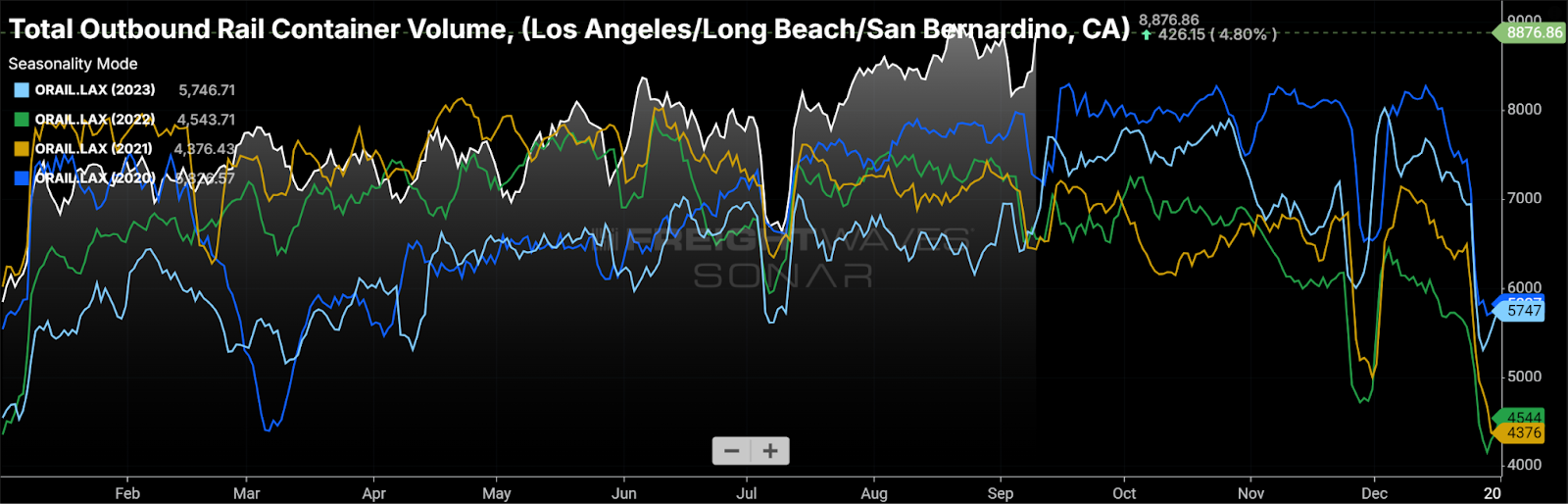
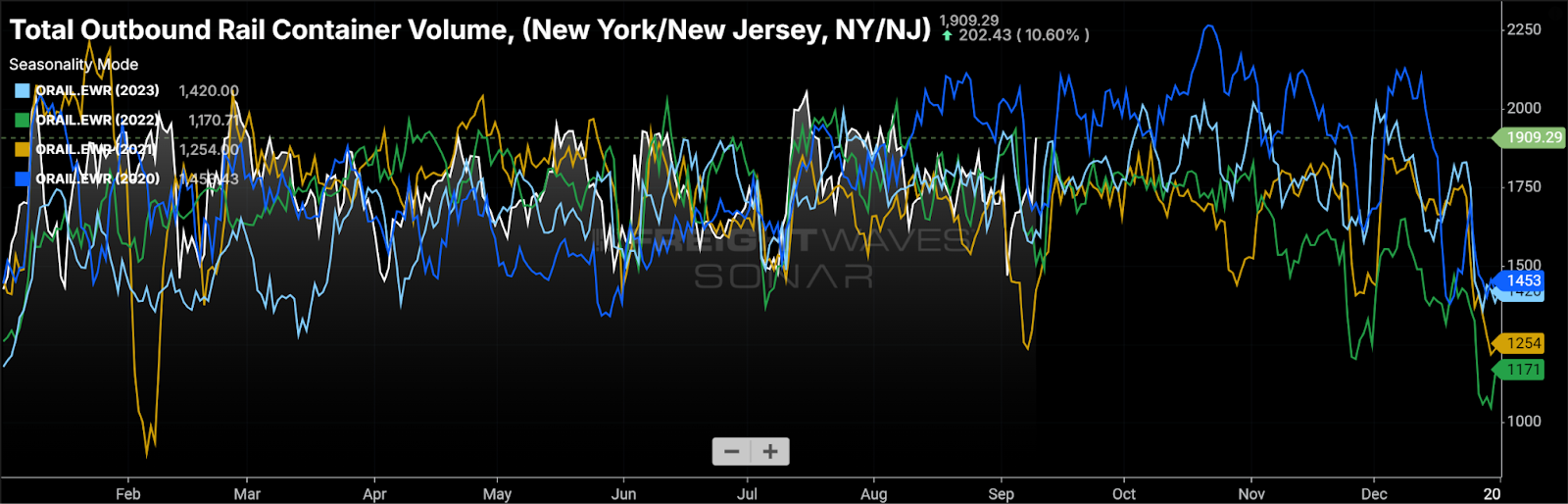
The trick in the graphs here (from the article) is to look at the white line representing 2024 volumes. It’s only two-thirds of the way across. But it’s way up in LA.

So already there is evidence of a flight by shippers to the West Coast ports from the East Coast ports. That’s not good news for the East Coast and South ports, who are the potential targets of the strike by the International Longshoremen’s Association (ILA). Those who follow the news know that September 30 is the date by which an agreement should be reached. So far the government has not intervened to force arbitration and require work to continue.

I love the statistics in this article. For instance the Long Outbound Tender Volume Index (tender bids (measured by an index) for trucking outbound from LA is up to 171 this year, way above the las two years. It will be hard to get trucking services outbound from LA in the immediate future; capacity will be short.
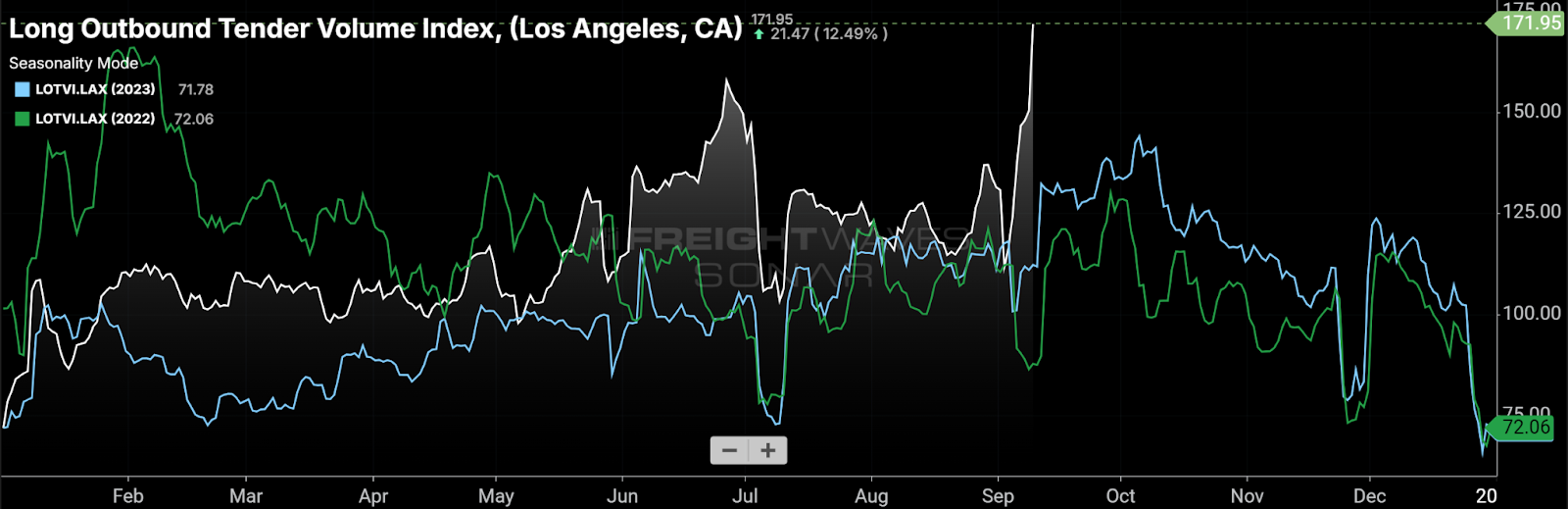
A logistics pro might well consider using the SONAR data to look for trends that might affect how she looks for transportation services, and the price she’s willing to offer.

Michael Baudendistel·Tuesday, September 10, 2024

https://www.freightwaves.com/news/shippers-wariness-of-potential-ila-strike-visible-in-sonar-data


Geopolitics and shipping

Geopolitics is having a great effect on ocean shipping today. Trade is where wars are fought now. It may have been true in the past as well, but the means and methods are changing rapidly.

I listened to this podcast featuring Jon Thompson, co-founder and commercial director of Ambrey, an international risk management company. He made several interesting points.

What’s become possible only recently is to combine, using digital infrastructure, information about many factors into an overview of the risk attendant on any voyage. Ambrey has been working on displaying info about piracy, missile attacks, weather, environmental zones, conflict zones, fuel availability and usage, and others, so it can be incorporated into contracts and insurance provisions, as well as used by captains and ship managers to plan voyages to reduce risk and increase profit.

Ambrey started out supplying onboard security to ships, intending to prevent piracy. But their vision has now expanded to all the hazards commercial ships face; assessing, rating, and providing insurance against them.

Another point he made is that the oceans, 70% of the earth, are becoming better understood and measured. Ocean shipping needs to take advantage of this increasing knowledge about who’s using them where and what conditions they are facing.

John Thompson’s view of the data, analytics, and AI involved, and the business aspects it affects, is most interesting. Take a listen.

John also has interesting views on what he and others look for in hiring new people.

Seatrade logo

Marcus Hand | Aug 08, 2024

https://www.seatrade-maritime.com/ship-operations/geopolitics-and-shipping-john-thompson-ambrey

The Big Supply Chain Analytics Failure – Supply Chain Shaman

The Supply Chain Shaman, Lora Cecere, always has something interesting to say and valuable to think about.

Her numbers show that supply-chain related firms are right now simply making incremental improvements on existing systems, and are ignoring the need to go out there and find new ways of gathering and making use of supply chain data.

Systems people for years have known that you have to re-engineer the processes, the ways of doing business, and the software must support that. While it may turn out that the software is already right to support new processes, it’s much more likely that entirely new forms of software are required for the processes to work properly and fluidly.

That means analysts and business process participants together must spend the time needed to truly understand what they need to accomplish, and put in the up-front research and planning to get the system designed well. Few companies are willing to tolerate the time required. But that’s where the true value is realized.

I was just reading an article that tried to set forth a design strategy for a Port Communication System for ports in South Africa. Currently they don’t have them. But the article was at such a high-level that there was no insight into the new procedures and methods that would be needed to really bring these ports into the 21st Century. I’m afraid that much development of supply chain systems is done in that way. We look at existing processes instead of imagining how the processes and the whole scenario could be different. And once we’ve imagined the new world, we can see that the systems have to be different.

So the message to supply chain firms is to put on your imagining cap and plan systems that actually make quantum improvements; done just band-aid the old processes.

WRITTEN BY LORA CECERE• NOVEMBER 3, 2021• 3:04 PM• ANALYTICS, BIG DATA SUPPLY CHAINS

The Big Supply Chain Analytics Failure – Supply Chain Shaman