Tag Archives: green shipping

Bangladesh and the HKC: Standards for Ship Recycling

Shipbreaking has always been dirty and dangerous work. For years it was performed under inhospitable working conditions, in countries where legal protection for workers was not strong. Then the Hong Kong Convention (HKC) for the Safe and Environmentally Sound Recycling of Ships became effective in June of 2025. That changed things. Now there is clear international law marking how recycling yards must operate if they want to handle the world’s discarded ships.

Bangladesh is the largest ship-recycling state, with many facilities, and much tonnage recycled into scrap steel and other by-products. The government has drafted new Ship Recycling Rules 2025, to assure that their recycling yards are compliant with both Bangladesh law and with the HKC. And these rules have been receiving some criticism.

The opinion piece linked below, by a prominent Bangladeshi professor and ship-recycling expert, debunks that criticism. It seems that Bangladesh has managed to thread the needle, creating a legal structure that will support compliant shipbreakers, while giving noncompliant facilities a chance and a time window to become compliant. And it’s done in a way that will not allow the noncompliant yards to persist in a rogue fashion.

The law should be welcomed by the shipping community. Bangladesh is a preferred location for shipbreaking because of its ideal geographical setting and better cost profile. A rising tide of scrapping is coming, because of the need to improve environmental characteristics of ships, and an oversupply created by a newbuilding splurge. Bangladesh needs to be included in the roster of decent places to recycle ships.

Published Jan 11, 2026 2:30 PM by Prof. Dr. Ishtiaque Ahmed
https://maritime-executive.com/editorials/op-ed-bangladesh-s-phased-hkc-rollout-makes-sense-if-enforced

Bulk carriers and containerships moving at slowest speeds

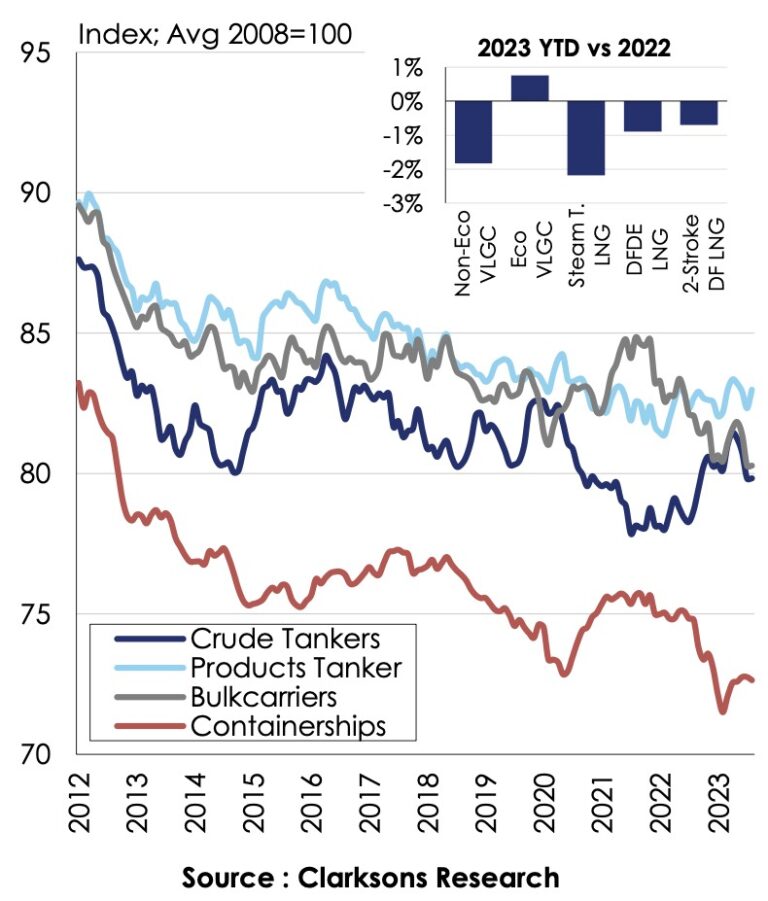
Slow steaming is a good way to save on fuel costs and meet the new IMO requirements. So ships have slowed down. But I was amazed at the graph below, showing a trend for quite a while.

Slowing down is an important way of cutting CO2 emissions from fuel oil. It also implies that more ships are needed to meet planned sailings on a scheduled route. It’s a deliberate reduction of individual ship ‘productivity’, since fewer paid cargo-carrying trips can be made in a year. But it may be a better fit with the demand for shipments right now, and it might result in fuller vessels.

We should remember that slow steaming will not eliminate CO2 emissions problems; it’s a stopgap at best. New types of power with very low or zero emissions through their life cycle well-to-wake must be developed. The investments have to be made.

Sam Chambers October 2, 2023

Bulk carriers and containerships moving at slowest speeds on record this year

WASP project ends as winds blow fair

The EU’s Wind Assisted Ship Propulsion (WASP) project has ended. So far we seem to have favorable findings concerning the viability of retrofitting ships with wind propulsion units in addition to conventional power.

Estimates seem to be coming in at up to 10% savings. This is in the North Sea, where the winds blow heavy. However, 10% is not to be sneezed at. It’s a significant reduction in both energy and GHG emissions.

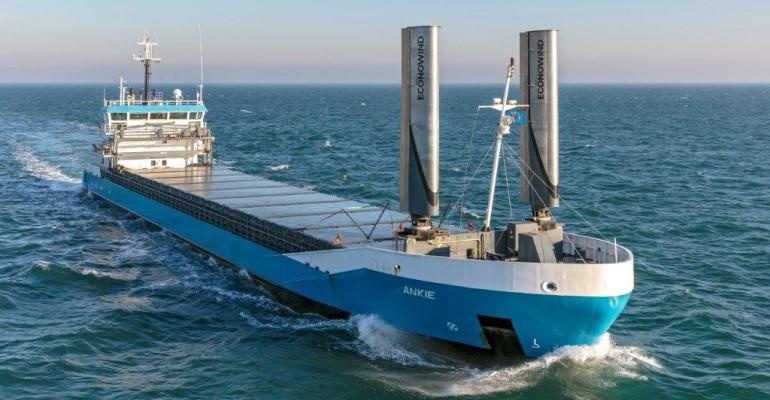
The picture of a bulker fitted with the sails shows one way to add the wind power.

Cooperation between shipowners and technology developers as well as university researchers is key. The list of partners is impressive.

This statement is from their website:

“The project brings together universities, wind-assist technology providers with ship owners to research, trial and validate the operational performance of a selection of wind propulsion solutions on five vessels thus enabling wind propulsion technology market penetration and contributing to a greener North Sea transport system through harvesting the region’s abundant wind potential.”

Source: https://northsearegion.eu/wasp/

WASP has published their last newsletter, and also other publications. It’s interesting reading. There is also a final webinar.

Since I sailed as a kid, I’ve been interested in commercial applications of wind power. It’s exciting to see new engineering marvels tailored for the maritime world. Let’s hope the WASP research will lead to more and better wind power for ships.

Seatrade logo

Paul Bartlett | Jun 30, 2023

WASP project ends as winds blow fair