
Mike King wrote a piece about the risk that the IMO2020 fuel regulations will induce ocean carriers to speed up, thus burning more fuel and causing more emissions.
Most carriers are equipping ships with scrubbers, which will let them continue to burn high sulfur (3.5%) fuel, rather than shift to the lower 0.5% fuel grade. The scrubbers take out the sulfur and other unwanted chemicals, either discharging them into the sea (open-loop systems) or retaining them for disposal in port (closed loop systems). Some ports and countries have banned the use of open-loop scrubbers near their shores. China and Singapore are two.
Exceptions to the rules are in certain zones called Emissions Control Areas (ECAs), where the maximum sulfur content is 0.1%, very low. ECAs are set up by countries or trading unions like the EU with a mileage limit near their shores. While steaming in those zones, the ultra low sulfur fuel must be used.
I recently refereed a study [1] that indicated that the ECAs actually induced carriers to avoid them for longer, burning the high-sulfur fuel longer, and also in some cases going faster. It’s an economic decision problem with fairly straightforward calculations to optimize the route taken, based on the price differential of the grades of fuel and the exact time on each part of the route. Lower emissions and lower cost come about in opposition. The calculations are especially relevant for short sea shipping routes, such as along the East Asian and Chinese coastline. Ships can go offshore far enough and, using their scrubbers, burn the highest sulfur fuel which might be a lot cheaper, then dart directly in when they get near the port, into the ECA region.
On long sea routes a lot of time can be spent steaming with the 0.5% fuel, and speeding up might be a way of reducing the time and improving customer service by shortening the voyage. Delays in ocean shipping happen very frequently and are a source of much discontent among shippers; they also produce a lot of lost business for carriers.
The interesting part of the article to me is the clear indication that speeding up using a scrubber could be a viable strategy for improving service. We might then get greater CO2 emissions than we did with slower steaming.
Sustainability is always tightly coupled with economics. We have to watch for unintended consequences whenever rules are imposed, and be prepared to adjust them. Hopefully, we’ll keep trying to improve the emissions control measures.
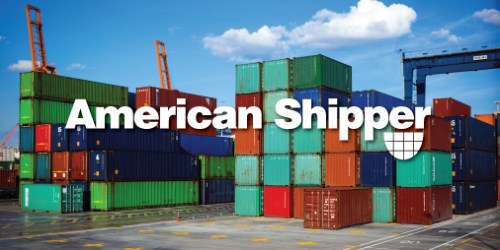 via Could IMO 2020 prompt box lines to speed up? – FreightWaves
[1] Zhao, Yuzhe; Fan, Yujun; Zhou, Jingmiao; Kuang, Haibo. Bi-Objective Optimization of Vessel Speed and Route for Sustainable Coastal Shipping under Regulations of Emission Control Areas, Sustainability, under review(2019).
 Cathy Morrow Roberson
 Supply Chain and Logistics