Cold-chain logistics are more complicated than ever. When many fresh products are imported, it’s crucial to have warehousing facilities that can handle many aspects of importing as well as storage and transshipment. Large brokers recognize this.
The article here shows that CH Robinson division Robinson Fresh is moving to benefit from the increasing tide of Mexican and South American produce coming into the US. The new facility in Pharr, TX is state-of-the-art, and helps Robinson provide a ‘seamless experience’ for their customers. It cost over $33 million.
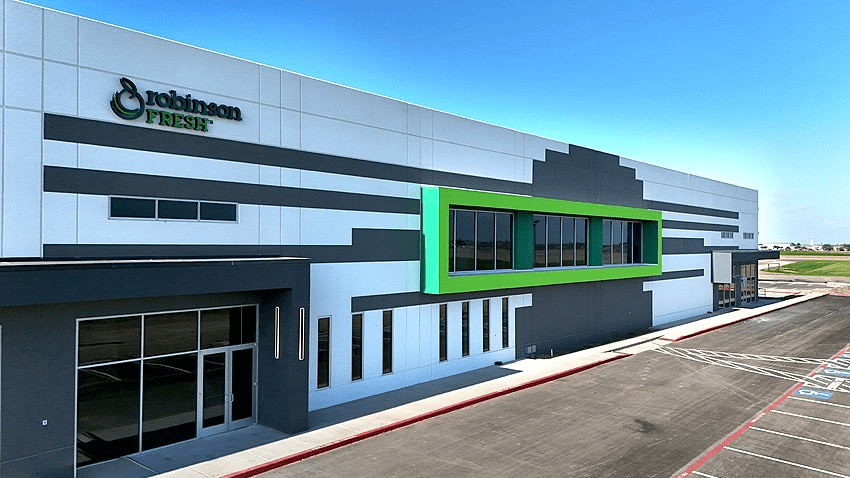
Robinson Fresh is a division of brokerage giant C.H. Robinson focused on produce and perishable supply chains. The company services grocery retailers, wholesalers and foodservice customers across North America, including companies such as Whole Foods, H-E-B, Walmart and Sysco.
Pharr, TX is in Hidalgo County near McAllen in southeast TX.
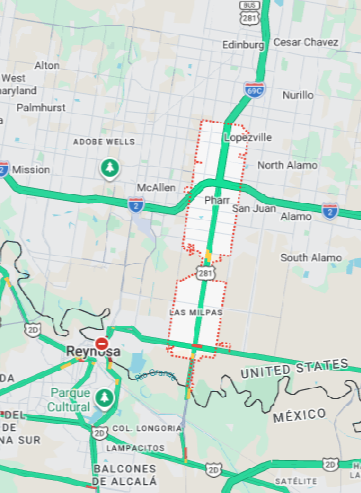
The Rio Grande Guardian provides more background. Over $50 billion in trade now crosses the Pharr-Reynosa Bridge each year. It’s all handled by truck. “We’re crossing about 1.2 million trucks a year through this bridge,” Luis Bazan, director of the Pharr International Bridge, said recently at the August meeting of the South Texas Manufacturers Association.
On average, between 2,700 and 3,200 commercial trucks pass through the Pharr-Reynosa International Bridge heading northbound into the United States each day. Traffic volume depends heavily on the agricultural and manufacturing seasons. Peak Months: Up to 3,200 trucks per day (largely driven by the winter and spring produce harvest, as Pharr is the nation’s leading port of entry for items like avocados). Slower Months: Around 2,700 trucks per day.
Combining both northbound (into the U.S.) and southbound (into Mexico) commercial traffic, the bridge handles over 5,000 total trucks daily, amounting to roughly 1.2 million truck crossings annually.
There’s another bridge, Anzalduas, just west of Reynosa, and there are rail connections to the ports at Brownsville TX – Matamoros MX. These logistics nodes place the Pharr facility in a key location for facilitating international perishable and cold goods trade.
“These facilities specifically focus on imports that come from Mexico and South America,” Robinson Fresh President Jose Rossignoli said. “We’re talking about mangoes, bananas, avocados, tropicals and limes. It requires a certain ability of repacking, quality control and consolidation.”
With international trade becoming more complex, the role of full-service brokers seems sure to grow. CH Robinson has recently been on a mission to become a more proficient operator. The current President and Chief Executive Officer of C.H. Robinson is Dave Bozeman. He officially took on the role in June 2023. Prior to leading the logistics company, Bozeman held executive and operations roles at Ford, Amazon Transportation Services, Caterpillar, and Harley-Davidson. He was a legend at Amazon for his focus on measurable results, wise use of technology, and lean leadership.

Noi Mahoney·Friday, May 22, 2026

Steve Taylor – Posted Sunday, September 1, 2024 12:23 pm