Trucking is a big business with a great many operational challenges. Trucking firms and fleets deal with them every single day and there’s a lot of associated administrative overhead.
So it seems strange to me that startups have not tried to address these operational problems using AI.
This article presents some of what aifleet, a trucking firm with around 200 vehicles, is using to make trucking a better place to work.
Aifleet CEO El Khoury seems to me to be very farsighted, especially in the current state of innovation in trucking.
The new money flowing to AI in logistics seems to be going to applications relating to brokering. It is not going to routing and scheduling.
But it’s routing and scheduling where big efficiency gains can be made. It’s also where the lifestyle of truckers can be improved, an area many big carriers ignore. I think there would be easy pickings for AI-enhanced scheduling and routing practices. aifleet thinks the same.
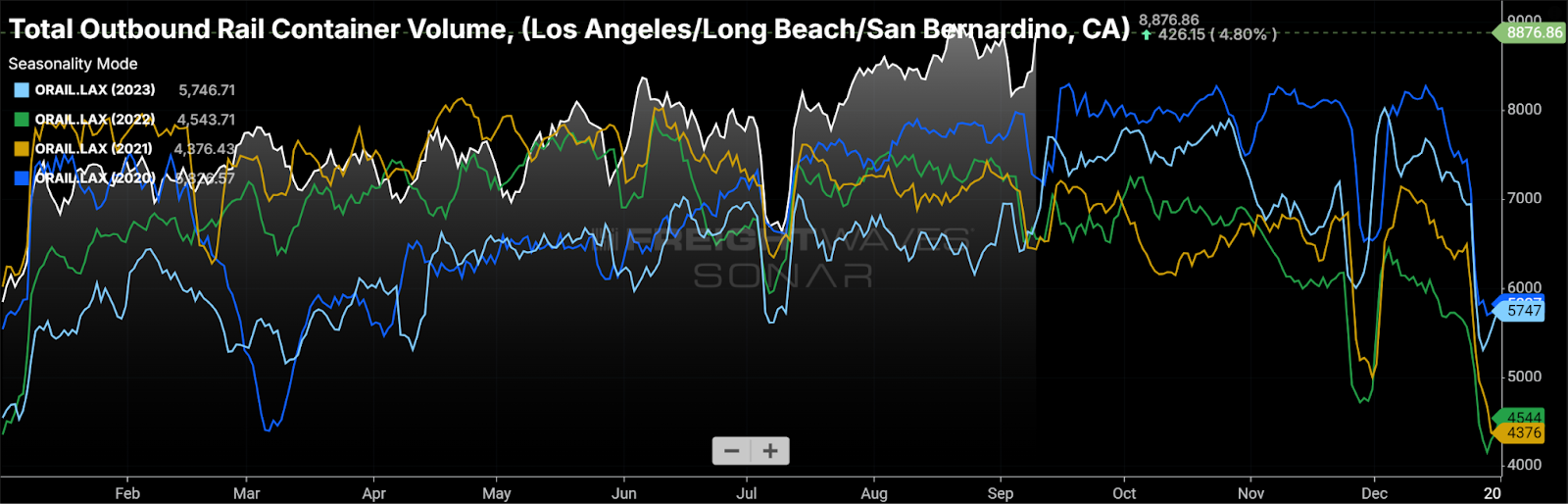
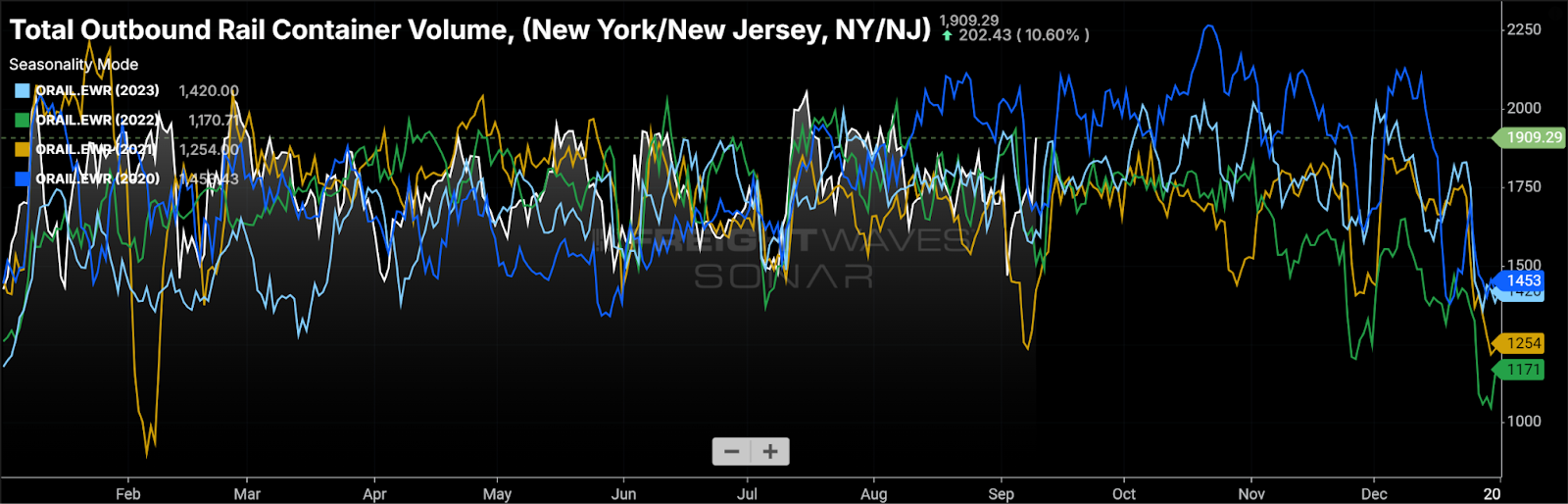
It’s interesting how when we measure something we soon are able to pick up signals that something different is happening. Freightwaves has been publishing SONAR data on different logistical measures for quite a while. This article shows several measurements which tell us that shippers are looking for alternatives in advance of any East Coast port strike in the US.
Inbound bookings are up at Los Angeles. Outbound container volume is up at LA and down at New York.
The trick in the graphs here (from the article) is to look at the white line representing 2024 volumes. It’s only two-thirds of the way across. But it’s way up in LA.
So already there is evidence of a flight by shippers to the West Coast ports from the East Coast ports. That’s not good news for the East Coast and South ports, who are the potential targets of the strike by the International Longshoremen’s Association (ILA). Those who follow the news know that September 30 is the date by which an agreement should be reached. So far the government has not intervened to force arbitration and require work to continue.
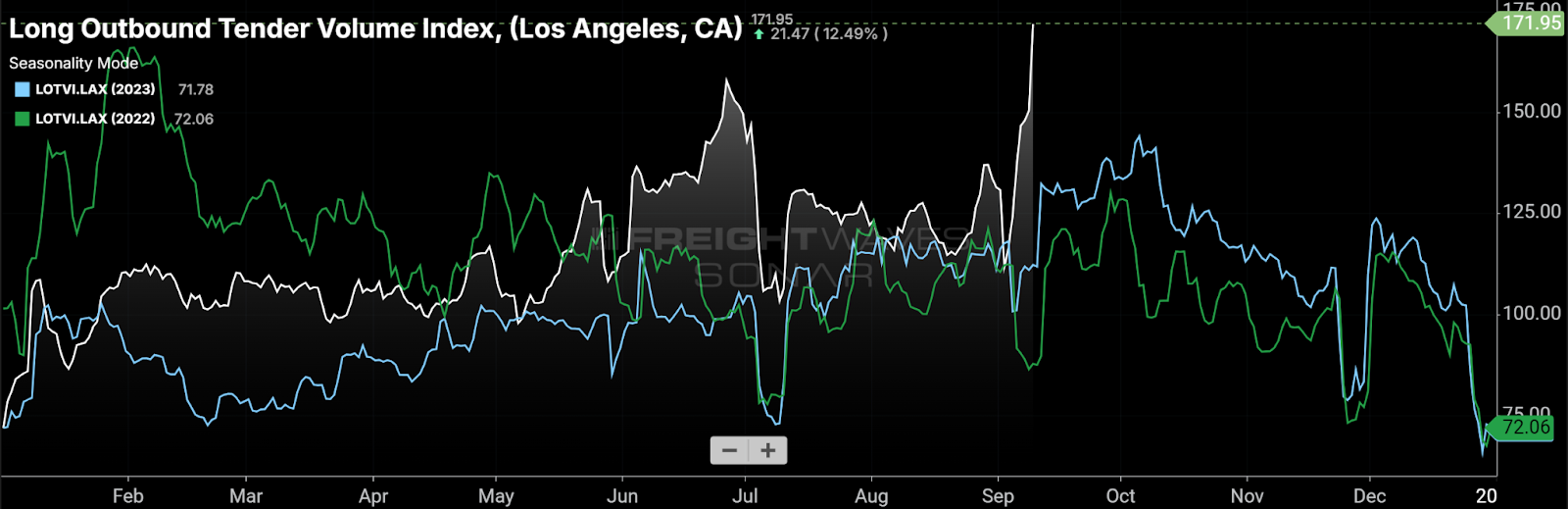
I love the statistics in this article. For instance the Long Outbound Tender Volume Index (tender bids (measured by an index) for trucking outbound from LA is up to 171 this year, way above the las two years. It will be hard to get trucking services outbound from LA in the immediate future; capacity will be short.
A logistics pro might well consider using the SONAR data to look for trends that might affect how she looks for transportation services, and the price she’s willing to offer.
DP World, the international port container terminal operator, is beginning a new rail service from Mexico to the US for automobiles. It will use 53-foot containers to move the cars by truck or rail. That makes the containers compatible with the standard size container used in the US and Mexico as well, rather than the 40-foot ocean containers. That eliminates a need to transload for US road transport.
It’s a good idea. Large quantities of cars are made in Mexico for the US market. The business is growing, because some automotive components made in China face trade barriers when ocean shipped directly to the US.
Intermodal transport by rail over long distances will reduce emissions considerably. A properly engineered service could compete in travel time with road haulage to a distribution point.
Railroads have notorious problems with reliability of service; they have trouble predicting when arrival may occur. According to rail experts, this is largely due to delays that occur in switching yards, which can be unpredictable in length. And when one stopover in a yard is delayed so the next outbound train is missed, days can be added to transit times.
However, auto transport in containers like this has advantages.
First, at the destinations, cargo owners have some buffer storage, so delayed delivery is seldom critical to business.
Second, the container cars can be mixed and matched on trains, so if some are ready, they can make the train for the next leg; others can wait for the next train. All the containers in the original train needn’t go together. My rail expert thinks this ability to make shorter trains is key to making rail transport more reliable and yard performance more efficient.
Third, intermodal transport of containers has been shown to reduce emissions over individual container transport by truck. That’s important for many shippers today, due to public companies’ need to report Scope 3 emissions.
Finally, there’s a growing demand for car transport from Mexico. The country is proving to be a dependable place to locate auto factories, with adequate labor supply and manufacturing knowledge. There should be plenty of business for DP World.



 Supply Chain and Logistics